

Sarah Kuta Interviews C.S. Beaty About Loser*
This story was originally published in the Grand Island Senior High Alumni Newsletter

By Sarah Kuta1
Classmate Chris Beaty reflects on high school—the good, the bad, the ugly—in his new memoir2

High school is a strange in-between—the place where you start to figure out who you are, but also where you never quite feel like you fit in. It’s full of firsts: friendships, crushes, heartbreaks, big dreams, and awkward stumbles. It’s messy yet transformative, the bridge between childhood and whoever you’re becoming.
Chris Beaty knows these contradictions all too well. Today, he’s a successful young professional in Omaha, building a life with his wife and three children. But roughly two decades ago, he was just another wide-eyed freshman finding his way through the crowded halls of Grand Island Senior High.
For Beaty, high school was a maze of confusing encounters, quiet insecurities and a few painfully embarrassing moments that still make him cringe all these years later. But, looking back now, he’s come to appreciate his high school experience—in part because it helped shape him into the person he is today, but also because he’s realized high school is just … awkward for everyone.
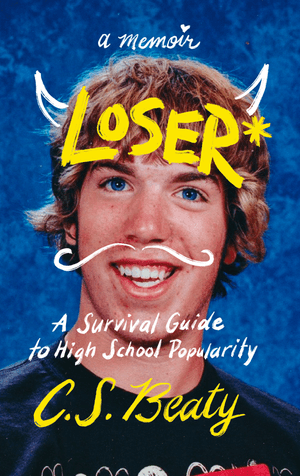
Loser*: A Survival Guide to High School Popularity
Book cover courtesy of Chris Beaty
Beaty (GISH class of 2008) reflects on his formative years in his first book, “Loser*: A Survival Guide to High School Popularity,” out later this month.
Beaty and I were high school classmates and friends, so reading his book was a fun trip down memory lane. I chatted with him to learn more about his burgeoning career as a writer, as well as what it was like to reflect on his time at GISH. Here’s what he had to say.
The following interview was lightly edited for length and clarity.
Sarah Kuta: What inspired and motivated you to write this book?
Chris Beaty: I’ve always wanted to write, but I never knew what I was going to write about. I’ve always enjoyed writing and I had in the back of my mind, ‘OK, yeah, one day I’ll write a book,’ but I didn’t know what it would be about, necessarily. Around 2022, I bought a typewriter. It was just a fun thing to mess around with, and I started writing essays. I started writing as a means of processing life, and it was almost therapeutic in a way. At that point, everything was in essay form so, a lot of the stuff that made it into the book initially existed as just different essays.
I was writing a lot about high school and I don’t really necessarily know why, but I think I was just reflecting on that time of life. But what prompted the book was, I was with my daughter, I think she was around six or seven at the time, and we went to McDonald’s for lunch. We saw these two people who looked like they were on a date and I thought, ‘Who in the world would go on a date in McDonald’s? What a trashy thing to do.’ And then I remembered, ‘Oh, I took my homecoming date to McDonald’s. I did that once.’ And so I decided that’d be kind of a funny essay—you know, this loser kid who takes his homecoming date to McDonald’s. And so I sat down to write that and then I went, ‘Well, in order to tell that story, I should probably back up,’ because that happened my sophomore or junior year [of high school]. So I backed up. And I just kept on backing up until I thought of the first girl I kissed on her driveway, before I even entered kindergarten. I just kept writing and, eventually, the pages started to stack up. So, I decided this might not be an essay, this might be a book.
SK: Aside from your own memories, what did you use for source materials?
CB: Often, I would write something and then let it sit for a while. And then I’d remember later, ‘Oh yeah, that happened too,’ and I would add to it. It was almost like this iterative process. Once you put yourself back in that frame of mind, then all these memories start coming back.
I also read through as much Grand Island stuff as I could. I read “The Night of the Twisters” by Ivy Ruckman. I watched the movie. I went back to Grand Island a couple of times. I went through every yearbook I had. I did not interview anyone for it, so it’s definitely just my perspective.
SK: What’s the reception been like so far?
CB: I reached out to a lot of people after I wrote the book, just to let them know about it. Nothing’s been bad. Everyone I’ve talked to has been very excited about it. But I’m still kind of not sure, right? I’m not sure what to make of [the feedback] because it’s such a personal book. It’s all about awkward high school stuff. And some people just don’t like to go there, so I don’t know.
SK: What was it like to think back and revisit all these memories? What emotions did writing this book bring up for you?
CB: Some of it was super fun. Just thinking about the dumb stuff we did and just remembering those stories and giggling as I was writing. It was as if you’re meeting up with an old friend again. And some of it was just brutal, honestly. Each of the chapters is kind of anchored around a relationship I had, for better or worse, during that time frame. None of them worked out in the end, at least not in a romantic sense. So, every one of those interactions had an element of regret with it. You try to put yourself back in that situation and experience it the way you experienced it at the time. But, at the same time, now you have a little bit of knowledge, right? So you’re thinking of stuff you could have done [differently] that would have made it go better. All these times you thought you were being smart or smooth… when, really, you were just being an idiot. It’s like, ‘Just tell her how you feel, man, and if she doesn’t feel that way, that’s OK.’ There were a few of those that were just really hard.
I can think of a couple of times where I was writing and I just had to stop and collect myself again. A few of those moments got captured on the page, too. There’s a little transition paragraph I wrote just reflecting on those moments in life … those turning points where you made a decision one way or another. The girl I took to McDonald’s… at the end of that homecoming date, it was very clear she had a level of interest in me and I panicked. I didn’t know what to do. And to this day, I regret the way I responded. And it’s not that I regret the way my life turned out, but I regret the way I responded because I had no reason to treat her the way I did and just kind brush her off and whatever. But I just freaked out. And I can see that now. But at the time, I was just immature.
SK: Did this whole process shape the way you’re thinking about parenting your own kids at all?
CB: Maybe in some ways. When I was growing up, I felt like I was doing something wrong by having feelings for girls. I was depressed and insecure and anxious and all these things. I felt like there was something wrong with me for feeling that way, and so I think a lot of it is just remembering what it was like to be in that place. That’s really helpful for me as a parent.
I teach college kids now and I really think my biggest strength as a teacher is just that I’m not that far removed, I still remember what it was like to be a college kid. I don’t give assignments that I think are stupid because, if I think they’re stupid, then the college kids definitely aren’t going to get anything out of them. So, I think just that level of empathy is important, whether you’re parenting or teaching or whatever.
Reliving those moments and placing yourself back in high school, it certainly helps you be empathetic, even though my kids’ lives are going to be different than mine. But there’s also this universal human experience that I think everyone goes through, regardless of the generation, of feeling awkward and trying to figure out romantic interests and all that.
SK: Has writing the book changed how you think about high school?
CB: Yeah, I think it has. It has given me a sense of closure on this chapter of my life, as opposed to, before, I just wanted to ignore it. I moved away from Grand Island and I just wanted to pretend that whole chapter of my life didn’t happen. I wanted to become a new person, to reinvent myself when I left Grand Island and moved to Omaha for college. I didn’t really keep up with my friends from Grand Island, we just slowly went our separate ways and, honestly, that was a conscious decision for me at times. I just wanted to move on.
But, now, I still feel like it is in the past, but I have a sense of closure. It was still OK, it was still good. It was weird, but I’m still thankful for that period of time. I’m still thankful for where I grew up. I’m super thankful for the people.
And this goes back to your earlier question, but it has been so fun to reconnect with people from that period of time. And just the support and interest I’ve gotten from people [after I posted about the book on Facebook]. It’s all these people that I thought I would never see again. And it’s just a reminder that these are still good people. We went through a really weird time together and we’ve moved on. Hearing what some of my friends are up to now as adults, it gives me a sense of pride. We could laugh about things that we couldn’t laugh about then, and just realize we all went through something together. And that was really cool, even though it worked out differently for each one of us. Everyone I’ve reconnected with, we have shared that same sense of, ‘Yeah, [high school] was really weird, but man, it’s great to hear from you now.’ So, I think it did give me a sense of belonging again, and a sense of being OK with where I’m from. Not that I was ever ashamed of it, but just more so being proud and claiming it.
SK: Who is this book for? Who’s your ideal reader?
CB: I think there is a general appeal in the same way that people love “Sixteen Candles” and all those teenage rom coms. There’s hopefully a lot of nostalgic references from that time period, even for people outside of Grand Island. Anyone who has ever tried to hook up with a girl over instant messenger, I think they would like at least a part of this book. We’re never going to have that experience again. We can all look back at that and be like, ‘Wow, what were we thinking?’ I thought the stakes were huge, getting those stupid emoticons just right and picking the right song lyric. We all need to get together and make fun of that.
But, also, anybody from a small town, even if their town didn’t have a fiberglass cow that seemed to move from steak restaurant to steak restaurant. They probably have something like that and they can laugh at that.
I would also love for a high school kid to read this book and think, ‘Oh, wow, people have always felt the way that I feel right now. Even if it’s not OK now, it’s going to be OK in the future.’ That’s really the heart behind it. Life keeps going on, even if it sucks at the time. That’s just part of growing up.
SK: I hadn’t really thought of it that way, but the book really is a time-capsule for millennials.
CB: Yeah, for sure. That stuff was really fun to write about … the Axe body spray and things like that.
SK: What are some of your other goals for the book?
CB: I hope it finds an audience. I hope it finds some eyes. I hope it’s successful, in some sense that just allows me to keep writing. I hope people from Grand Island feel like it gives us permission to laugh at ourselves a little bit. I just want people to have a sense of pride in having a book about Grand Island. I hope the city rallies around it in a way that makes them laugh at themselves in a good, healthy way, because frankly, we have a lot to laugh at ourselves about.
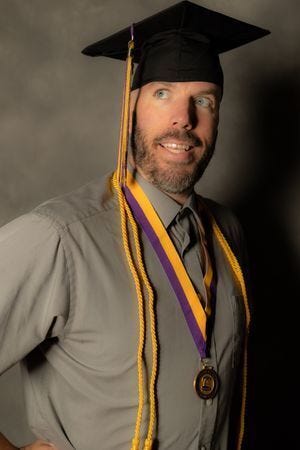
Chris Beaty
Photo courtesy of Chris Beaty
SK: What tips and advice would you share for someone who is in high school right now?
CB: I just felt so much pressure on myself. And, in some sense, I just needed somebody to tell me, ‘Chris, none of this really matters right now.’ I think we put so much pressure on kids to make good choices and work hard and, you know, don’t stay up too late. And there are probably kids who really need to hear that. But at the same time, for me, I just need somebody to tell me to just chill out. And I had a few mentors who were like that… When you hit those moments where people are like, ‘Dude, just chill out, none of this is that big of a deal,’ it could be life-giving because it gives you freedom to make mistakes and not beat yourself up and everything.
And I wish I would have taken more risks. I wish I would have asked more girls out. I wish I would have gone to more things. I wish I wouldn’t have been so concerned with saving everyone’s souls and getting them to youth group and converting them to Christianity and [more focused on] just being a kid and having fun and making mistakes. I thought I had to get everything perfect and get everything right, and I think that really stunted my development and maturity in a lot of ways. I always had a little of a class-clown vibe at times. And I think that was probably me acting out from just the insane pressure I’d put on myself to be the best at everything.
I just wish someone had said to me, ‘If you’re not the section leader for the drumline, it doesn’t matter. If not every single one of your friends becomes a Christian, it’s not your fault that they go to hell, even if that’s your theology. Just chill out, you don’t need to put the weight of the world on your shoulders.’
SK: What’s next for you?
CB: I’ve got two other books that I’m working on right now. One of them is kind of a sequel of sorts, about getting married and adopting three kids from Colombia. And then I have an aunt who was in the movie “Nomadland.” She played herself in the movie, she goes by the name of Swankie. I’ve been working with her to write a biography of her life, so that’s been a really fun process. Other than that, I’ve been trying to do podcast stuff and writing essays and everything. We’ll see where it goes. I have a full-time job and a part-time job on top of that, but writing is what I really love to do, and I do it by choice.
SK: Where can people find “Loser*” if they want to read it?
CB: You can buy it on www.csbeaty.com. There’s a bunch of other fun stuff on there too.


https://www.smithsonianmag.com/author/sarah-kuta/
https://gipsfoundation.org/alumni/rise-newsletter/newsletters/2025/november-2025.html?fbclid=IwY2xjawOIM8hleHRuA2FlbQIxMABicmlkETFNTXBId0JjOXRGZHJyUUpPc3J0YwZhcHBfaWQQMjIyMDM5MTc4ODIwMDg5MghjYWxsc2l0ZQEyAAEe2GRQlYfixZGm2grE2sBkfmcc7f8CTj3-cBIJGqzOU-04qgkaUWVy24IUXV0_aem_W5qp058_L95jLe6egv1A8Q#bottom-content-three
Great interview! Love reading about Nebraska authors!
I love that she got the word out for you!