

How I Became a Loser*
Prepared for a presentation on my memoir Loser*: A Survival Guide to High School Popularity

Have you ever wondered what was going on inside the head of your high school crush? Why they made the choices they did? Why they did or didn’t say that thing you did or didn’t long for them to say? How they could have possibly thought anything they did was a good idea?
And if you could read an account of what they were thinking, would you?
There’s likely a part of you that would jump at the opportunity to read something like that, and then another—perhaps bigger—part of you would be terrified of it. This tension between longing to be known, yet scared to actually know someone, defined so many people’s experiences in high school. And none of us ever talk about it. Even as adults. At least not about all of it. Not the weird parts. Not the embarrassing parts. Not the absolutely, gut-wrenchingly, terrible parts. And because we never talk about it, when the next generation of high schoolers start feeling those same awful, awkward, and agonizing growing pains—they think they’re the first people to have ever felt this way.
And even as adults, it’s still weird to think about. So we pretend like none of it happened, at least not the way that it really happened.
●●●
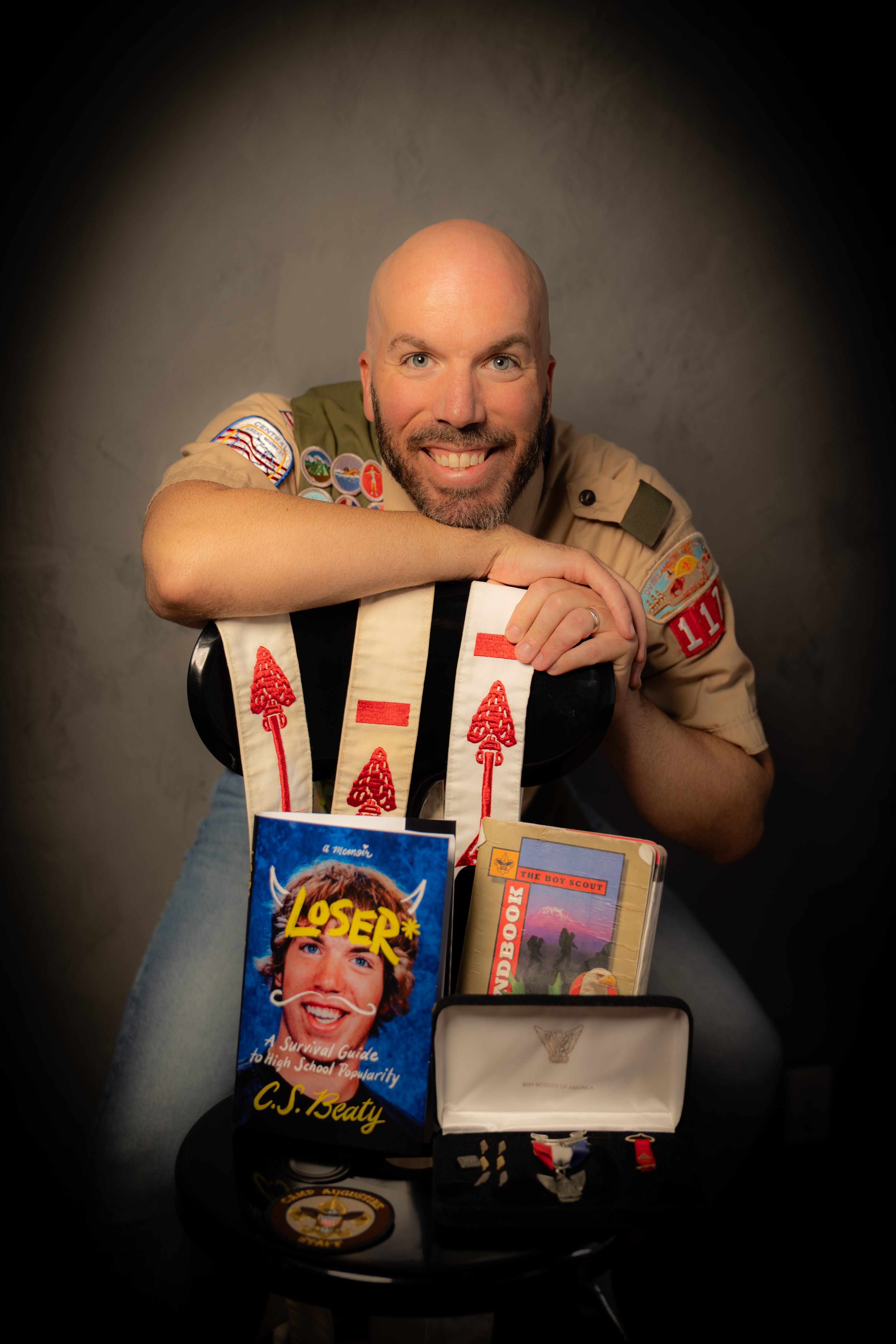
I spent my high school years convinced I was a loser, and it wasn’t until recently when I started realizing that my “cool” classmates also felt like losers a lot of the time. They may have responded to it differently than me. Used different coping methods. Chosen different masks to wear. But we were all suffering from the same chronic case of “insecure (and most of the time, horny) high schooler.”
I was the kind of guy who would have driven all you women insane in high school. I don’t mean that in a good way either. I was nice. Funny. And completely clueless. I’d go out of my way to be kind and funny around women, and then—once we started to get to know each other—panic. Shut off all communication in complete terror. And go home sad and lonely and wonder why no one loved me. You can probably guess I also listened to a lot of emo music when I was in high school. I couldn’t read any of those “signals” that the 80s teenage romcoms tell me that women send out.
Seriously ladies, you would have loved me. And then hated me.
Moms, you would have just loved me. You had absolutely nothing to worry about if you saw me hanging out with your daughter.
So, if you want to know what went on inside the mind of a teenage boy who was kind of like that, you’ll find this book fascinating.
Spoiler alert: it wasn’t much.
●●●
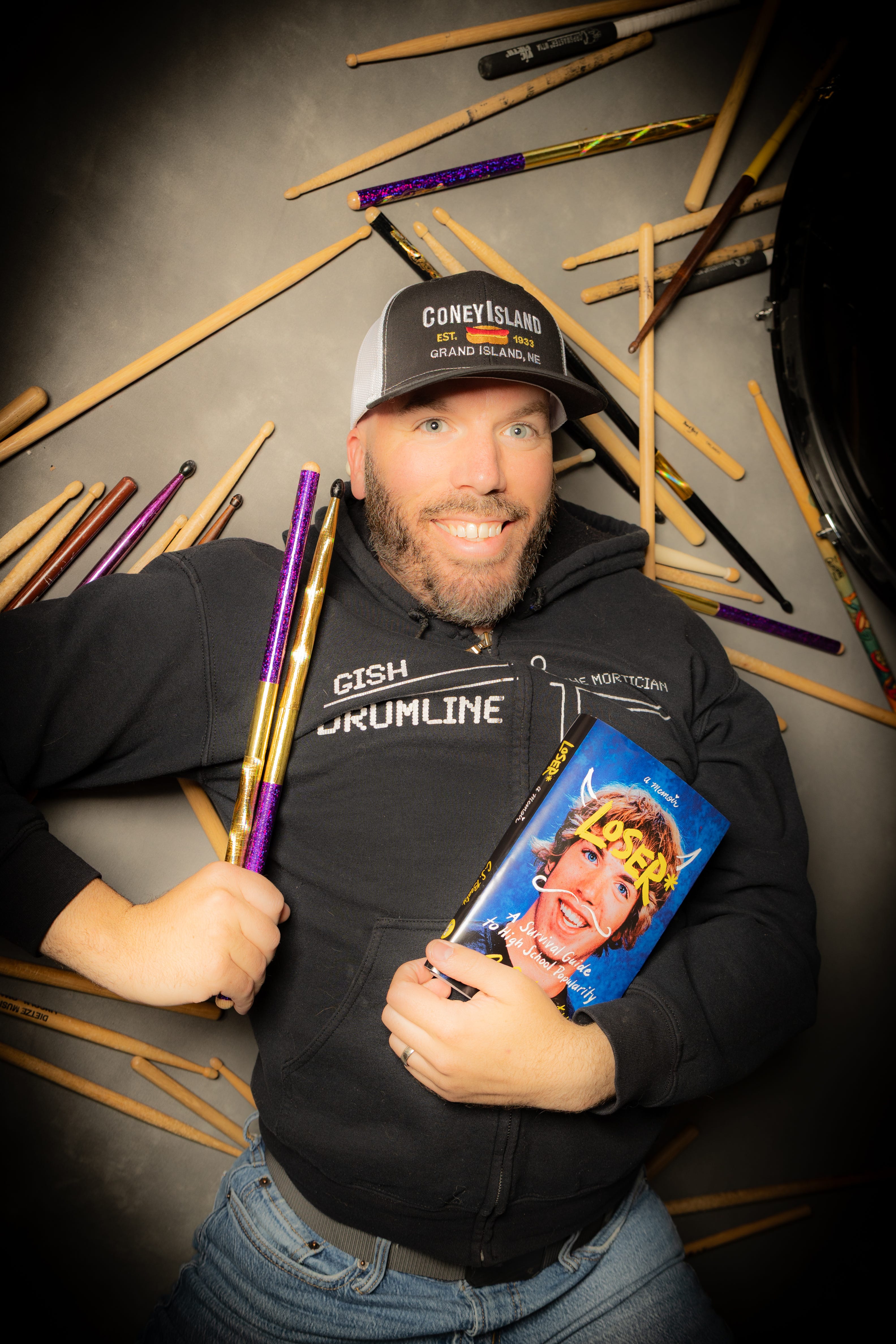
Trying to fit in as one of the most universal human experiences there is—but the irony of an environment like high school is that, while we’re trying to find our place in it, we fail to realize that everyone else is doing the exact same thing. We assume that everyone else has this thing figured out. We think that they are content, established, and thriving. And we assume we are the only person who feels out of place. And those people we compare ourselves to are simultaneously comparing themselves to us. They think we’re the ones who have it figured out. They think we are the ones who have found their place. And we want them to think this, so we act along—projecting some false reality that slowly wears down the confidence of our peers as they likewise wear down ours.
We all assume the other person has the secret and we all end up travelling alone.
So it’s no wonder why this dynamic makes high school a breeding ground for the most fucking awkward time of our lives.
But thankfully. As an adult, a lot of these stories are also really, really, funny.
●●●
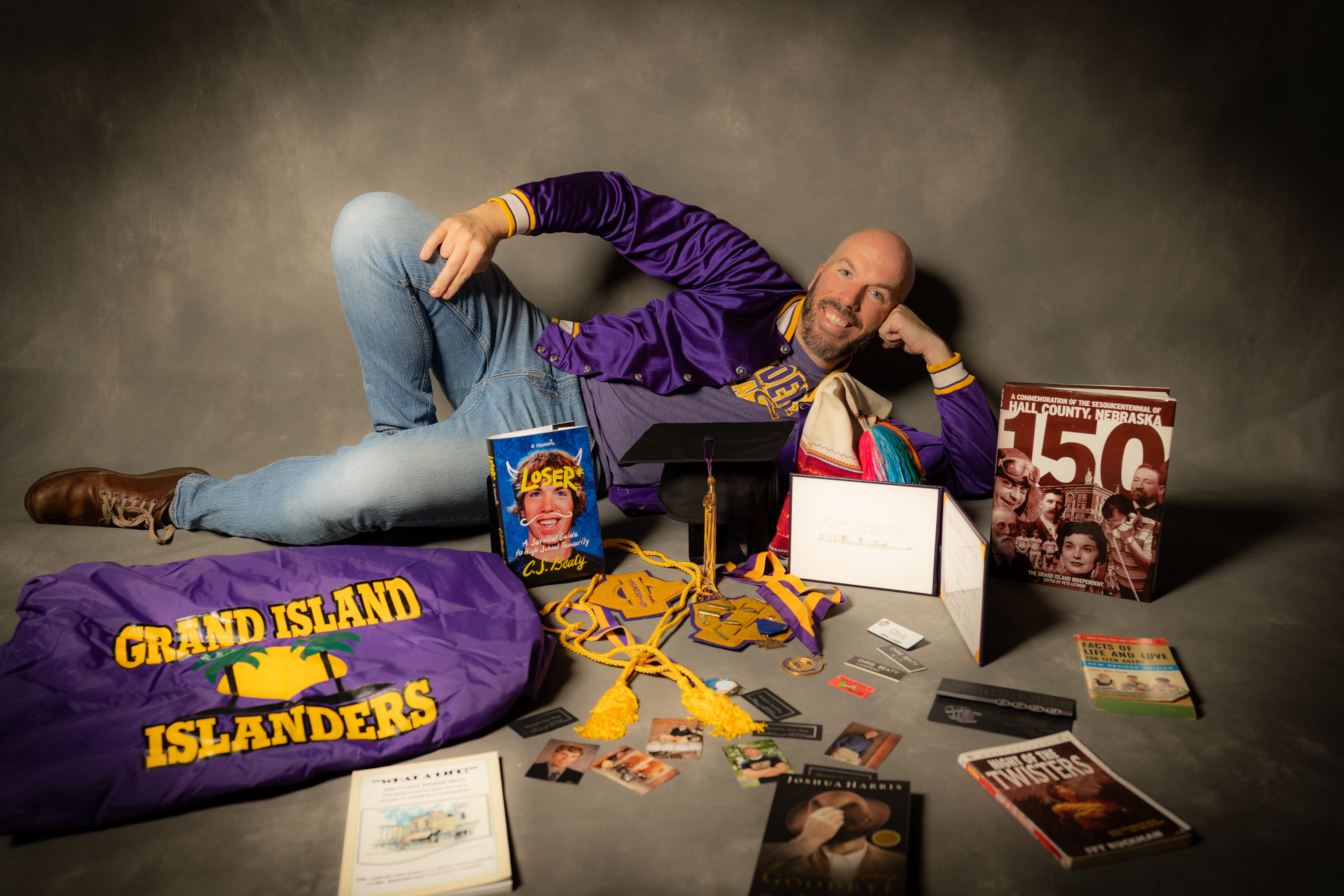
I didn’t set out to write a book about high school at first. A few years back I bought a manual typewriter and started writing essays. It was therapeutic in a way, and years later I still write the first draft of everything—including this particular essay—on a typewriter so I don’t get overwhelmed by the need to make everything perfect the first time. Many of these essays are left unpolished and I put little thought into connecting one with another. At a certain point, I started writing about high school. I wrote about my favorite English teacher. I wrote about a short-term mission trip I took during the summer. I wrote about joining the high school’s trap shooting team. And then I had the idea to write about all the girls I had a crush on.
Like everything I’ve written, the spark came unexpectedly. Something would happen in my normal routine, and it would remind me of something I hadn’t thought about in years. This time, I was eating at McDonald’s with my six-year-old daughter and observed what appeared to be two young adults on a date. My initial thought was, “who would ever go on a date in McDonald’s? What a trashy thing to do.” And then some synapse fired that had been dormant for years and I was reminded, “ohh yeah. I did that once.”
I took my first homecoming date to McDonald’s.
And I thought. Wow. I was such a loser. That could be a funny essay.
I sat down to write about that experience, but as I was outlining the story, it made more sense to talk about a summer romance I had in order to put the homecoming date in context. And then I thought it would make more sense to talk about the first girl I asked out in order to put that summer romance into context. And I just kept backing up until I started with the first girl I kissed. As a preschooler. On her driveway. By the time I felt I had sufficiently covered my awkward stories about girls, I had typed 105 pages on my typewriter.
I realized I had more than just an essay. This was a book.
●●●
I think there are two reasons why people read memoirs:
1. They read memoirs to learn about someone who is completely unlike them.
2. Or they read memoirs to hear about someone they can relate to.
During this process I read as many memoirs as I had recommended to me. If you’ve read Solito by Javier Zamora, Educated by Tara Westover, or We Will be Jaguars by Nemonte Nenquimo and Mitch Anderson, you probably know what I mean by that first category. These books floored me. I had never heard first-hand accounts of what it was like to illegally cross the border, be raised in an ultra-fundamentalist Mormon home, or be grow up in a rainforest.
But the types of memoirs that guided me were more like: The Life and Times of the Thunderbolt Kid by Bill Bryson, The World’s Largest Man by Harrison Scott Key, or even Me Talk Pretty One Day by David Sedaris. These were people who had very normal experiences—normal to me at least—and when I read them, I felt as if I was talking to a friend. A friend who understood me. These books made me feel less alone. These books made me feel known. This was the type of memoir I wanted to write.
Other than the tone of the book, the first thing I wanted to establish was the setting. Setting is anchored by two things: time and location. The book was intended to be a coming-of-age story about finding your place in life. This type of story is as common as disappointing football seasons in Nebraska, but it is the setting that dictates what makes my story either novel or familiar. This question of “who are my people?” is universal, but the way you find the answer is entirely dependent on the setting.
To illustrate this idea, I opened the book with a story about the island of Taquile in Lake Titicaca and the unique dating rituals that evolved in this setting.
“In addition to the floating islands, Lake Titicaca has forty-two “natural islands.” After leaving the floating island of Isla Pato Corazón, we boarded a ferry for a two-hour trip to see how island life differed on one of these permanent sites. Our tour guide grew up on one of these natural islands and told us how things worked where he was from. His native language was Aymara, an indigenous language spoken by the first water settlers. Not all the islands speak Aymara, and our tour guide’s Spanish was rudimentary enough that he and I could converse without confusing one another. He told us about mermaids and fishing, but his best story was how he asked his wife out on a date.
When his grandfather was a lad, it was tradition to take a flute to a particular beach and play a beautiful melody. If a young lady was impressed (or turned on) by the flute playing, she approached the flautist. They started chatting, and if things clicked, they got married. Over generations the art of flute playing was lost. Technology changed and kids no longer had an interest in learning skills where a digital alternative was available. Just as email and MSN Messenger replaced sonnets and letter writing, listening to woodwind music couldn’t compete with the sensual beats available through radio signals. But despite the progress of the industrial age, a dude still needs to figure out how to get a date. And conveniently, instead of learning the flute, now you can just buy a boom box.
When our tour guide came of age, he left his island and voyaged to the far-off shores of the mainland. Fighting back the demons of congested traffic and avoiding the sirens of knockoff Nike apparel sold on a street corner, our hero exchanged his life savings of disposable income to purchase a portable CD player from a home electronics store. Like John Cusack in Say Anything, the eligible bachelor picked the most stirring serenade from his music collection and returned to the beach of his grandfather to blast the love song in the vicinity of the island’s young hotties.
I asked our guide what he played to meet his wife. It was an easy question.
“Enrique Iglesias. Claro.”
…
But different rules have evolved on different islands. To an outsider, a culture’s customs can sound arbitrary and absurd—but to those within, the rituals seem completely natural. Habitual. Instinctual. The place you live defines what you consider normal, and it isn’t until you look from a distance that you can see how strange those “normal” practices might be.
And on the island of Taquile, everything centers around knitting a hat.”
This introduction serves as an allegory, illustrating that the only reason we find these customs weird is because we are not from that setting. People from Lake Titicaca may find the practices a bit odd, but they’re normal. It’s just the way things are done. And in Grand Island, Nebraska circa 2005 to 2008, the customs were just as odd. But they were normal. Familiar. And I wanted to point out how our customs were just as ridiculous as knitting a hat to determine your love life.
“Peace Lutheran Church came up with a brilliant money maker. Ostensibly to give kids a safe place to congregate on the weekends—but mostly to raise a shit ton of money on sales of cans of pop—this church opened their gym on Friday nights so middle schoolers could listen to radio versions of rap songs and grind on each other. I never learned what a middle school courtship was supposed to look like, other than it involved grinding on flat-chested girls at a Peace Dance.
Peace Dances intimidated me, but one couldn’t participate in the middle school social scene and ignore them. I never went alone, but I never went with a girl. Louis, Mike, or Austin would promise to meet me at the entrance, and we’d go in as a pack. At least until they spotted someone in their Top Five and left me on my own.
To prepare for each dance, I carefully selected my best Hawaiian shirt from Old Navy and accessorized with a shark tooth necklace I purchased from the Science Museum of Minnesota. Every fiber of my clothing was saturated with Axe body spray. My favorite scent was the crushed mint and rosemary of “Phoenix”—the blue can. I also had a discounted Walmart variety pack that was meant to be given as a Christmas gift set. The sampler came with two cans of “Essence”—the one with a red and blue dragon, scented with black pepper and cedarwood. I sprayed a line of Phoenix straight down the chest and a blast in each armpit, always over the top of the shirt. Not satisfied with the result, I repeated the process with Essence and completed the bouquet of fragrance with a short blast from the mandarin and sandalwood of “Kilo.” The green can. I also bought a jar of hair gel from the dollar store, but with no discernible hairstyle to keep in place, I simply ran a greasy comb dipped in goop straight through my bangs so my scalp could harden into a bike helmet. By the time I was ready to leave, my chemical smell radiated like a freshly opened pine tree air freshener.
The first Friday of each month, a line of pre-pubescent middle schoolers formed outside the locked entry of Peace Lutheran Church, wrapping itself around the nursery’s plastic playground equipment. All of us horny sixth graders paraded ourselves out of our parents’ cars like a movie premiere before segregating into cliques. As our sausage fests did annoying middle school kid stuff, we sneaked looks at our female classmates with caked-on makeup and crop tops in violation of the school’s dress code.
The fronts of our pants a little tighter, us losers watched as the boys with girlfriends entered the dark gym, bobbing their heads to Nelly. The rest of us hid in the line to buy cans of pop. We needed something to hold in our hands as we hugged the wall for the evening. Gum was strictly prohibited since it ruined the carpet, so chaperones canvased the sweaty mob with flashlights and paper cups. If you were spotted moving your jaw up and down, they darted across the floor, shined the flashlight in your face, and put the cup to your mouth to spit out the gum without saying a word. Repeat offenders were bounced out by whichever dad was guilted by his church small group into volunteering.
I never had any romantic moments at a Peace Dance. I don’t recall ever dancing with a girl, and certainly never rubbed my crotch on one. I mostly remember studying the felt banners displaying Lutheran symbolism and trying to convince someone on my football team to stop saying he was going to kill himself because his girlfriend dumped him.
I had no idea what the fuck we were supposed to be doing. So I did nothing.”
As I weaved together the narrative, I tried to find a few themes to unite the various stories. My editor said that the controlling idea was, “we gain wisdom and confidence when we think beyond ourselves and realize our peers are just as insecure as we are, despite appearances.” Yeah, that was a pretty good summary, better than anything I had come up with. This is why you hire an editor.
In my more amoebic mind while writing the book, I had a couple of things I kept coming back to. One was a line I thought of while walking my dog.
“That’s the thing about high school. We are all just shitty to each other.”
I didn’t know where that line would go exactly in the book, but it captured some of the insights I had gained throughout this journey. I shared the line with a writer friend of mine, and he added the rejoinder, “we’re all just shitty to each other because we lack the tools to know how to be any other way.”
That was a helpful addition.
The other story that I knew I didn’t want to write was a romantic comedy. I have always been frustrated with the John Hughes Sixteen Candles, and even Adam Sandler, movie endings where everything leads to some big catharsis when the awkward loser makes out with their dream date who is clearly out of their league but charmed nonetheless by the protagonist’s dorky naivete. As someone who was a complete dork in high school, I knew this was bullshit. The dorks didn’t get the hot girl. They just sat around and felt bad about themselves until they grew up later in life and figured out who they really were. I wanted to write a story about that kind of person, with all the tension of an 80s teenage romcom without the cliché happily ever after ending. Because I thought this resembled real life more accurately. It certainly resembled mine more accurately.
The only book I can think of that accurately reflected this was The Count of Monte Cristo. In the movie, the main character gets the girl, but not in the book. He goes after the girl, that’s kind of all he does, really. But he doesn’t get the girl. And this ending was so disturbing to our romantic sensibilities that they changed it in the 2002 movie version. In my first draft, I quoted two entire pages from this brilliant ending, but it was removed after some early readers told me they thought it was lazy to just rip off Alexandre Dumas for a couple of pages. But the idea still penetrated through to the soul of the book.
Live and be happy, beloved children of my heart, and never forget that, until the day comes when God will deign to reveal the future to man, all human wisdom is contained in these words: Wait and hope!
Your friend,
EDMOND DANTES, Count of Monte Cristo1
I still think this is the greatest passage ever written. And I knew I couldn’t write something that beautiful. So I decided to make this book funny and add some stories about accidentally peeing my pants while pheasant hunting.
●●●
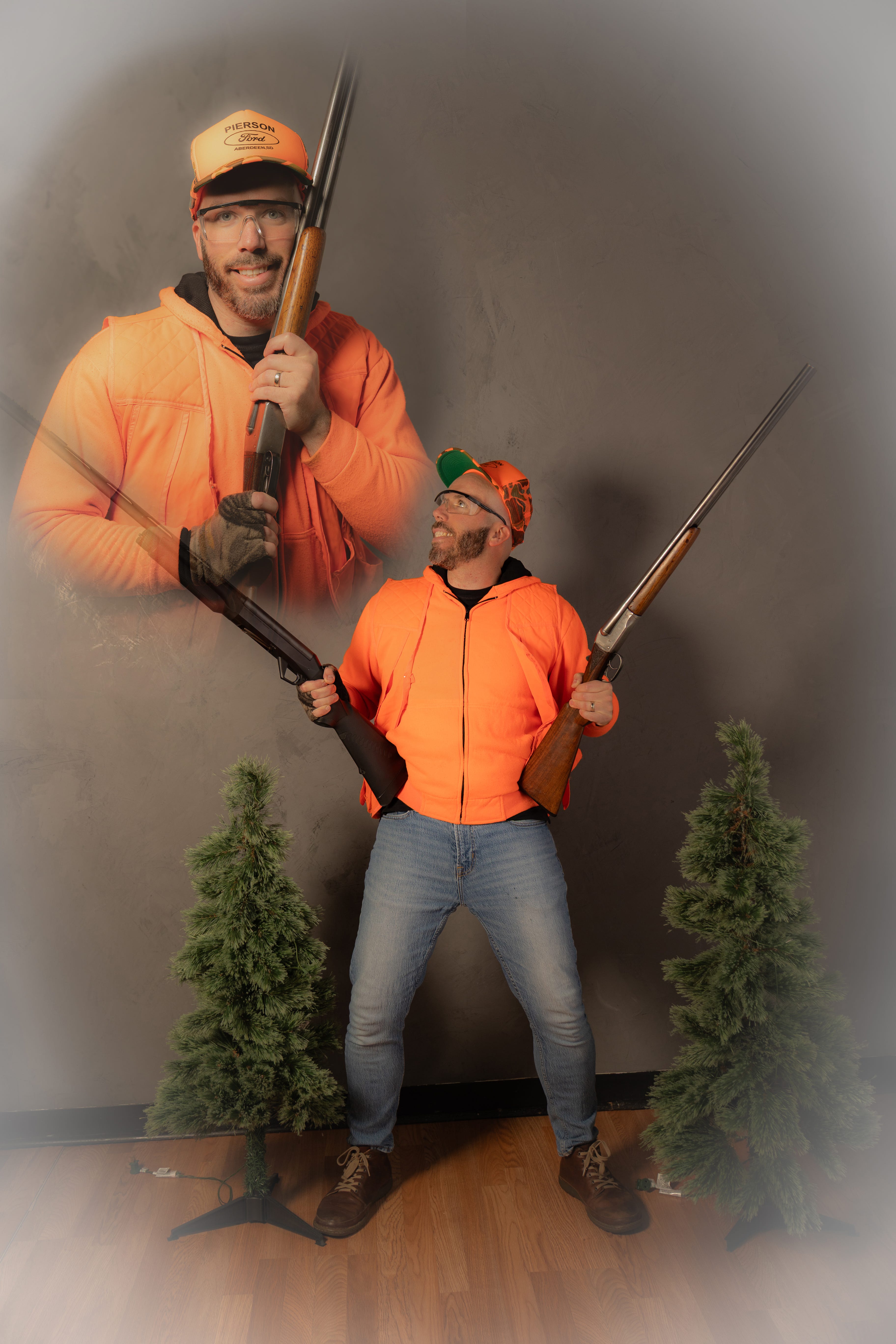
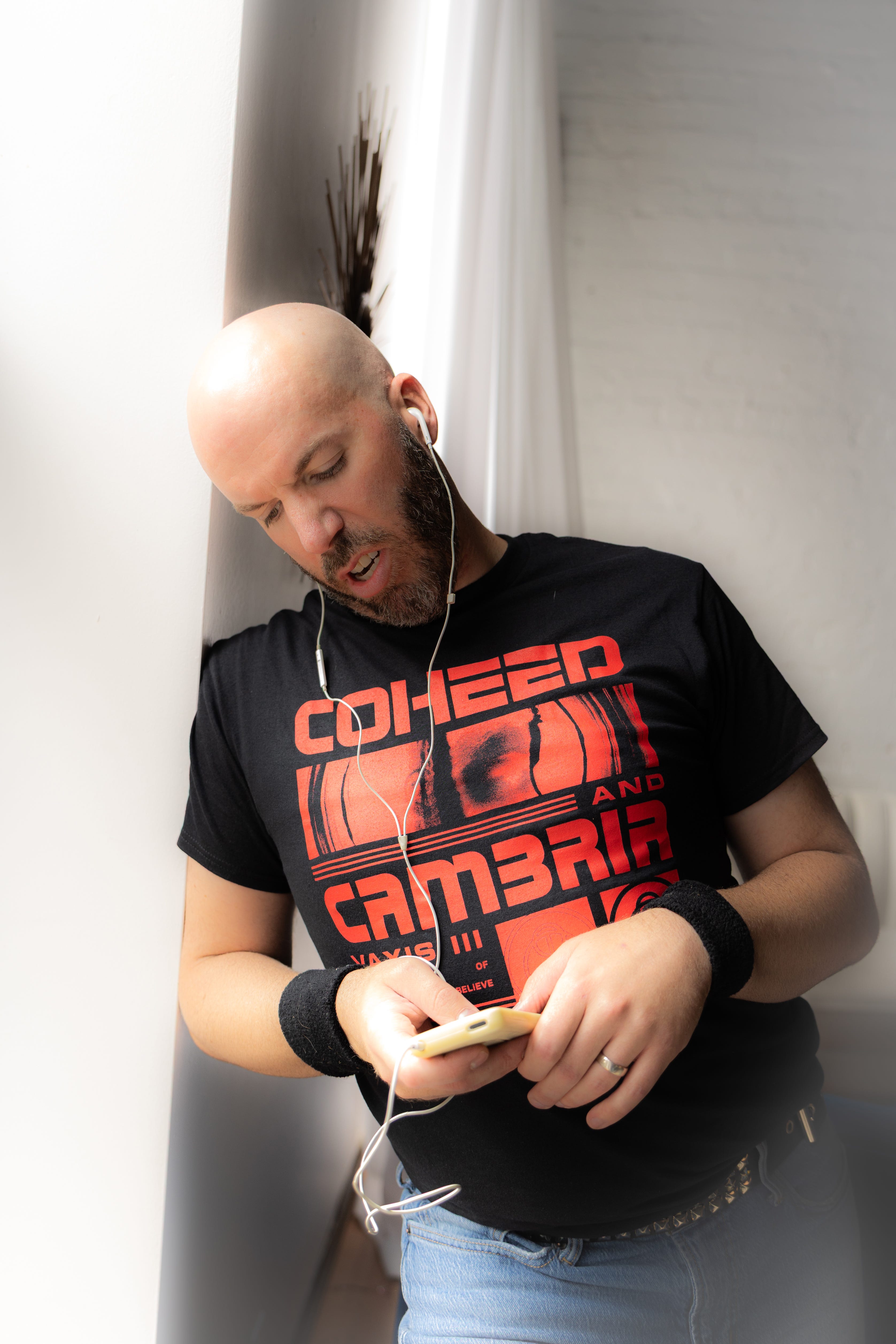
One reader described the book as a time capsule for millennials, and I think the description is fitting. I was heavily influenced by cultural moments at the time like: emo music, purity culture, and the transition to digital technology. I vividly remember the days when both the iPod and the iPhone were released while I was in high school, and I saw the before and after. My freshman year no one had a cell phone, then a few people got a Motorola Razr and a limited texting plan. By graduation, no one spoke to each other verbally anymore. I was also late to receive my own cell phone, so I felt the loss of not having a portal to this digital world where everyone else seemed to live. Those moments were heavily influenced by the time I came of age.
But then there were things like: Boy Scouts, competitive trap shooting, marching band, and garage bands where I looked for an identity of my own. These stories may be different than your own, but I think you can substitute any of those groups with the activities you were associated with during your own high school years and feel some empathy toward me while reading. This quest to find your place may be the thing we all have most in common.
Because that’s the thing about high school, no matter how alone we thought we were at the time, we all went through our own version of pretty much the exact same thing.
And now, I want to give you all permission to laugh about it at my own expense.


The Count of Monte Cristo by Alexandre Dumas, Translated and Abridged by Anonymous, Barnes and Nobles Classics, pgs. 589-591