


How could a vagabond woman who lived in her van end up a co-star to Frances McDormand in the blockbuster 2020 Academy Award-winning hit Nomadland? And whose transitory existence provides valuable life lessons on surviving – and thriving – in today’s world?
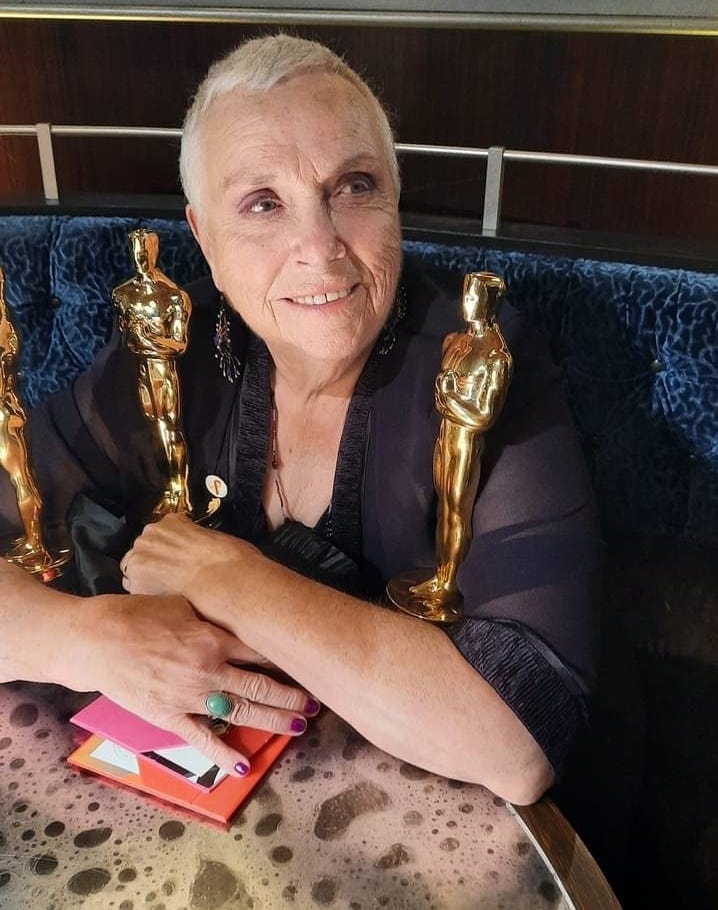
That’s the opening line of the query letter I wrote to send to literary agents—well it’s what my editor wrote and I slightly tweaked. Pretty good, right?
My aunt and I have been working on her biography for almost a year now. We’ve made it through the first thirty years of her life and so far, it’s really damn good.
Even before my aunt became a nomad and starred in an Oscar-winning movie, her life was captivating. She was born in 1944 in Indiana to a Christian Scientist mother who denied her any modern medical care. She suffered from chronic migraines throughout her life but wasn’t permitted painkillers as a child. Her father walked out on the family while she was an infant, leaving her with a deep longing for a parental bond that she never found. While in high school, her mother moved in with a boyfriend and Charlene stayed behind in their family home, living alone for the duration of her senior year. After high school graduation, Charlene traveled alone by bus from Indiana to South Dakota to locate her father, not telling him she was coming until she was at the bus station before her final stop. When she met her father, she was also introduced to five half-siblings who had no knowledge of her existence until that moment. Including my own father. After living in South Dakota for a few months, her stepmother chased her out and Charlene moved back to Indiana to begin college. During that time, she fell in love, dropped out of school, married a CIA agent, moved to Iran, and gave birth to her second son in a Tehran hospital. While later living in Liberia, the couple experienced marriage trouble. Charlene returned to the United States alone, got a divorce, started a commune, worked as a nanny for an abusive man with post-traumatic stress disorder, became a summer camp counselor, and moved to Colorado for college. And that just brings us to 1974. She hasn’t even become a nomad yet and certainly hasn’t starred in any movies.
This process has been quite a bit different from when I wrote my first book. The biggest difference, is I have a partner. My Aunt Swankie is acting as my research assistant. She has spent most days when she’s not on the road actively cataloging boxes of old journals, letters, and family records for salient life events and sending me relevant documents to form the narrative. Despite being her nephew, Swankie and I never interacted until 2025 when we began working together. Because I didn’t know her until we began this project, I have an objective perspective but am admittedly searching for a familial connection of my own. We communicate every day and our growing relationship has already made this project worth it.
The other difference is that I’m actually trying to find a publisher. The world of writing books is in a weird place. Amazon and other print-on-demand services have made it so you can ignore all these ivory tower New Yorkers who run the book world, and it’s very popular for all us “indie” authors to shit on those people because we’re the artists and they’re the suits. Well, after trying out the self-published route for my memoir, it turns out there may be some perks to getting someone who actually knows what they’re doing to help. So I’m trying to do that with my aunt’s story.
But here’s the thing, agents and publishers have one goal: to sell books. I mean they would love to discover the next To Kill a Mockingbird, they’re not bad people, but they have jobs. And jobs are supposed to pay you money. And to get money, people need to want to buy your books. Which means that even if you have the next To Kill a Mockingbird, it doesn’t help if no one wants to read it. And it’s really, really hard to tell people “hey trust me, you’ve never heard of this author, but he’s like really great. Easily $25 for a new hard cover great. Go ahead just buy it.” So that means, I have to try to convince these people that people want to read (and…sorry…pay for) this book about my aunt. And the easiest way to do that is with statistics.
Which means, if you want to help Swankie’s story get the attention of these book people, there are some things you can do. And I’m sorry, it’s going to sound very self-serving to me. Because they are. There’s really no way around it. Here’s my desperate cry for help:
Publishers want to know that an author has a track record of selling books. Which means, it would be really helpful if I sold some copies of my current book Loser*: A Survival Guide to High School Popularity. The hardcover, paperback, and ebook are all available on Amazon. And the audiobook is available on Apple. All these links are easily found on csbeaty.com. The magic number is 1,000 copies sold in the first year. I’m a little over 300 after six months in. I have a lot of work to do.
If you don’t want to pay for my book because you’re not sure if it sucks, I don’t blame you. I don’t buy books from authors I’ve never heard of either. So what would be really awesome and FREE is if you request that your local library buys a copy. Hardcover, ebook, and audio book are all available for library purchase. I look at my own public library app every day and it makes me so happy to see when my book is checked out.
Another free option: after you read the book, or if you want to lie—I’m cool with lying, then put stars on things! Amazon, Goodreads, Apple podcasts, your library app. Anything! If you can click some stars for Loser* then I’ll take them! Agents and publishers love seeing lots and lots of stars.
Subscribe to my weekly newsletter for updates on the progress on this book and other fun stuff. If you like something, then like, comment, and do that sort of thing.
All this feels silly, and I feel silly talking about it, but it’s the language the publishing industry speaks in today’s environment. If funny books about awkward, hormonal high schoolers aren’t your thing—well just do it knowing you’re helping Swankie’s book down the road.
And as a thank you, if anyone sends me an email with a mailing address to alieneagle 51@csbeaty.com, I’ll mail you a free bookplate. If you read the book, the email address will make more sense.
So there’s the shameless request. I feel dirty even saying it. But just to remind us all why I’m doing it, hears a portion of the query letter I wrote that will be sent to literary agents when the time is right. I really think we have something special:
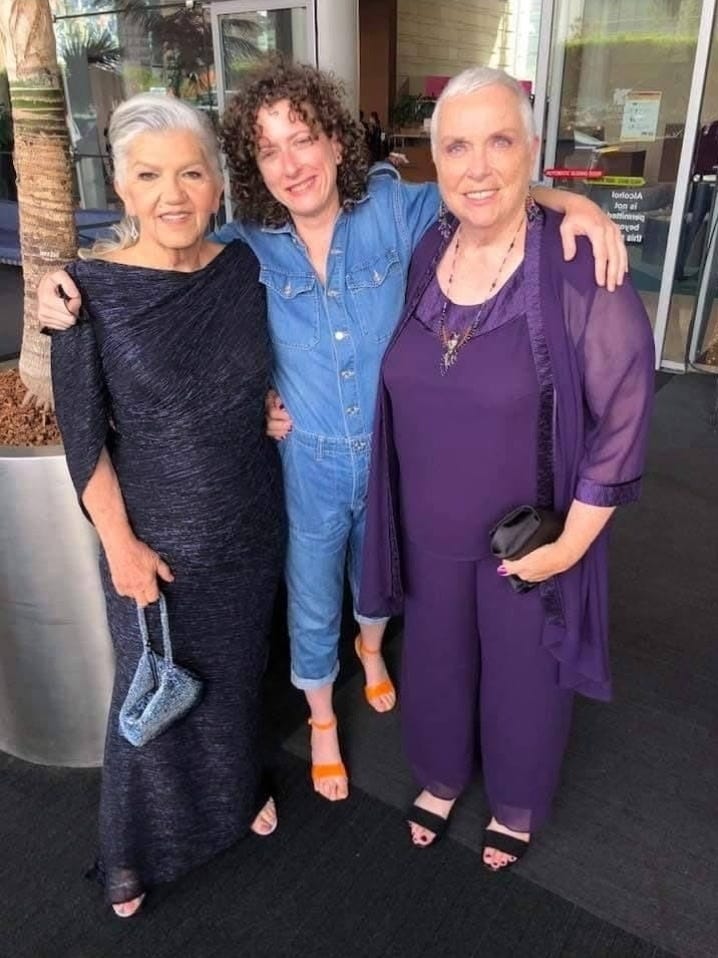
Charlene Swankie was an actress in the 2020 Academy Award-winning Best Picture Nomadland. The film was adapted from a nonfiction book written by journalist Jessica Bruder who befriended my aunt. When Bruder met her, she had adopted the moniker “Swankie” in honor of the surname of her late husband. When the work was later adapted into a movie, screenwriter Chloé Zhao crafted a fictional storyline about a character named “Fern” played by Academy-Award winning actress Frances McDormand. My aunt was cast to play herself as McDormand’s co-star in a film that later won three Academy Awards and two Golden Globes. Zhao took Swankie to the Academy Award ceremony as her plus-one and thanked her by name in her Oscar acceptance speech. This story follows a rags-to-riches convention, but with an ironic ending. Despite her brush with fame, Swankie’s life hasn’t changed much. She still lives in her van and keeps to herself. And she still has many of the same wounds as she did before.
Despite being her nephew, I didn’t grow up with a relationship with Swankie. I first heard her story the same way the rest of the world did when she started appearing on lists of potential Oscar nominations. I felt guilty about this, so I didn’t reach out to her other than accepting a Facebook friend request she had initiated. But when I released my own memoir, Swankie was one of the first people to congratulate me. She said she always wanted to write her own story, so in an attempt to reconcile with my own distance from my family, I asked her if I could write it with her. And she agreed.
I was published in the Journal of Architectural Engineering and I self-published a memoir in December 2025 titled Loser*: A Survival Guide to High School Popularity. In the first five months of promoting, the memoir has sold over 300 copies and received positive reviews from Kirkus, BookLife, and Indie Reader. Kirkus Reviews gave the title a “Get It!” designation. Between my aunt and I, we have a combined social media presence of over 4,000 followers.
I believe we have a truly original and marketable concept. The movie Nomadland gripped the film community by providing a stunning glimpse into this neglected society and breaking many Hollywood conventions. But that story was just the beginning. It was a glimpse of the current state of these nomadic people, but it wasn’t an in-depth look at how generations of abandonment can shape someone’s story. This family trauma shaped Swankie, but as her nephew I am discovering how it also shaped me. The movie Nomadland has received renewed interest because of Chloé Zhao’s recent success adapting and directing the film Hamnet, which is evidenced by an uptick in the Nomadland royalties my aunt has recently received.
This book will not only appeal to fans of Nomadland: Surviving America in the Twenty-First Century by Jessica Bruder, but also: The Blind Side by Michael Lewis, Travels With Charley by John Steinbeck, Into the Wild by Jon Krakauer, and We Will Be Jaguars by Nemonte Nenquimo and Mitch Anderson. These works exposed readers to stories that are familiar yet often go untold. They showed us pictures of human resilience with in-depth analysis of character conventions that we recognize but know little about. Our book about my aunt will do the same.
I would love your help to give Swankie’s remarkable story the greatest reach possible.
Thank you.


